Gun Sprint
- 4.1
- Rating
- 10.00M
- Installs
- Free
- Price
 Analysis by App-foxy
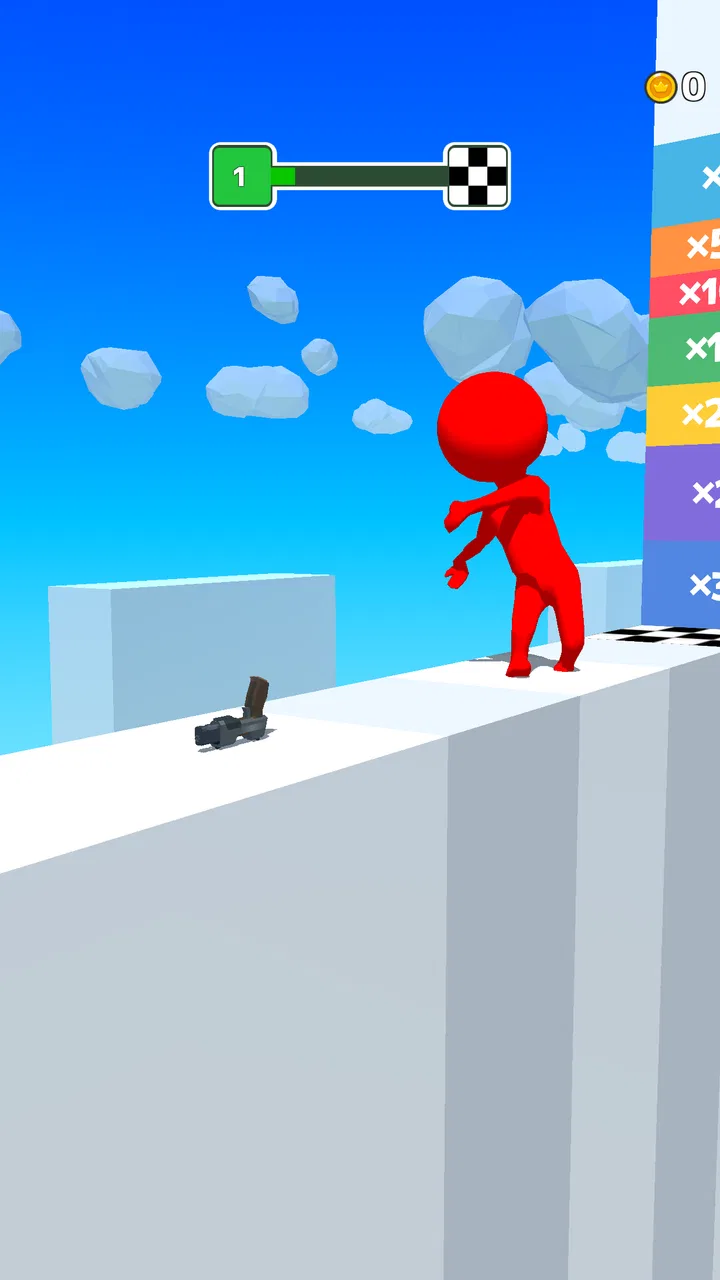
Gun Sprint is the kind of casual game I open when I want something immediate rather than a long session with menus, tutorials, or a complicated story. The idea is easy to understand: keep a gun moving through a shooting run and use each shot to control its motion. That simple setup makes it approachable within seconds, but it also means the game depends heavily on timing. You are not managing a large inventory or building a character; you are learning how a small change in aim or rhythm affects the next part of the run.
After spending time with it, I see the appeal clearly. This is a compact reflex game from KAYAC Inc. that works best in short bursts, especially when I have a few spare minutes and want something more active than a passive time-killer. It is free to play, aimed at Everyone 10+, and belongs firmly in the casual game category. Its current version is 0.8.3, and it runs on Android 6.0 or later, so it is accessible on a wide range of devices.
How the basic run feels in everyday play
The first few attempts are mostly about understanding the relationship between firing and movement. Each shot is not just an attack; it is also part of the way the gun travels. That gives the game a small but meaningful skill curve. At the beginning, I tended to focus only on hitting what was ahead. Soon, I realized that a successful shot could still leave me in a poor position for the next obstacle or target.
You May Also Like

 Google Keep - Notes and lists
Google Keep’s Quiet Growth Shows the Appeal of Simpler Notes
As mobile work gets busier, Google Keep keeps winning a simple contest: capture a thought quickly, find it later, and get on with the day.

 Blood Strike: 2.5 Anniversary
Blood Strike’s Loadouts Turn Every Drop Into a Tactical Gamble
A close look at Blood Strike’s custom loadouts: how fast access to signature weapons reshapes its battle royale rhythm, rewards preparation, and narrows the gap between fights.

 Pandora - Music & Podcasts
Pandora’s Music Is Easy to Start, but Harder to Recover
Pandora’s strength is its low-effort path from a seed to a station. Its weak spot is how much confidence it asks you to place in connection, setup, and quiet recovery.

 8 Ball Pool
 Is Built on Rivalries, Rematches, and Routine
A close look at the rivalries, rematches, shared routines, and unanswered safety questions that turn a quick pool match into a persistent mobile community.

 Samsung Music
’s Quiet Strength Is Playing What You Already Own
Its reach comes less from spectacle than from dependable access to a personal library. That simplicity is both the app’s strongest retention engine and its ceiling.

 AccuWeather: Weather Radar
AccuWeather Review: A Quick, Clear Forecast for Everyday Decisions
For everyday plans, the best forecast is the one you can understand quickly. AccuWeather makes rain timing, radar, and local conditions easy to act on, with a few trade-offs.
More From Our News Desk



That is the central habit I recommend: look at the next moment, not only the current target. A shot can solve the immediate problem while creating another one if it sends the gun too far, too high, or into an awkward angle. Experienced play is less about tapping as quickly as possible and more about choosing when a controlled shot is better than a rushed one.
This makes the game suitable for short breaks. I can play while waiting for a bus, take a few attempts during a coffee break, or use it as a quick reset between longer tasks. A run does not require the commitment of a traditional action game, and the controls are simple enough that I do not need to relearn a large set of commands each time I return.
At the same time, I would not describe it as completely mindless. The early accessibility hides a repeating question: should I fire now to gain movement, or wait for a more useful angle? That decision becomes more important when the screen gives me less room to recover. The game rewards attention in small doses rather than demanding a long, uninterrupted session.
A practical starting routine
My preferred baseline workflow is simple. I begin a run by watching the movement for a moment instead of immediately trying to force speed. I use the opening section to notice how much influence each shot has, then I adjust my timing rather than repeating the same tap pattern blindly. If a run fails, I try to identify whether the problem was poor aim, poor timing, or an overly aggressive attempt to move forward.
That distinction matters because repeating a failed action without understanding it can make the game feel random. In my experience, it is usually more useful to change one thing at a time. If I fired too early, I delay the next attempt. If I reached a target but lost control afterward, I use a softer rhythm rather than simply tapping faster.
A realistic example is playing during a short lunch break. I might have enough time for several attempts but not enough patience for a deep game. Gun Sprint fits that situation because each try gives immediate feedback. I can stop after a single run without losing a complicated campaign, then return later and still remember the basic control idea. That convenience is one of its strongest qualities.
Settings and device habits worth checking
There is no reason to overcomplicate the setup, but I still recommend checking the phone before judging the game. I play with the screen clean and hold the device in a way that keeps my tapping finger relaxed. Because the action depends on timing, accidental touches and an awkward grip can feel like gameplay problems even when the real issue is physical control.
I also check the game’s available sound and notification options before settling into a session. If I am playing in public, I prefer a quieter setup so I can concentrate without disturbing anyone. At home, sound can help make the action feel more responsive, but it is not essential to understanding the basic play. The important point is to choose a setup that lets me notice timing without creating distractions.
Screen size changes the comfort of play more than the difficulty itself. On a smaller phone, I use a lighter touch and avoid covering too much of the action with my finger. On a larger display, I can hold the device more loosely and watch the next section more comfortably. Neither approach turns the game into something different, but both can reduce unnecessary mistakes.
I would also avoid testing it for the first time when the phone is already overloaded with distractions. Incoming messages, an unstable grip, or switching rapidly between apps can interrupt the short timing windows that make the game work. This is a small title, but its control style benefits from a calm screen and a consistent hand position.
Repeatable patterns that make attempts better
The most useful shortcut is not a button combination; it is a repeatable decision process. I watch for the point at which a shot will do two jobs at once: hit the immediate target and place the gun in a better position for what follows. That is more efficient than treating every target as an isolated event.
I also try to separate recovery shots from progress shots. A progress shot is meant to move the run forward or deal with the target in front of me. A recovery shot is used when my position is becoming awkward and I need to regain control. Recognizing that difference prevents me from chasing speed when stability is the real priority.
Another useful pattern is to keep the first few attempts deliberately conservative. I use them to learn the rhythm of a section, then increase my confidence once I know where the difficult transition arrives. This is especially helpful for players who become frustrated by repeating the same mistake. Slowing down at the beginning can produce better results later because it gives me a reference point.
When I am trying to improve, I avoid changing aim, timing, and tapping speed all at once. If I alter everything between attempts, I cannot tell what helped. Instead, I make one adjustment and watch the result. That approach sounds obvious, but it is one of the clearest differences between random repetition and genuine practice in a game this compact.
The game also works well as a test of attention rather than endurance. I get better results when I play a small number of focused runs and then stop if my timing becomes careless. Continuing while distracted can reinforce rushed habits. For me, a short pause is more valuable than forcing another attempt with the same tired rhythm.
Where the simple design starts to show its limits
Gun Sprint’s simplicity is both its strength and its main limitation. It is easy to begin, but players looking for a deep progression system, a large strategic layer, or a substantial narrative will probably find it too narrow. The game concentrates on the shooting-run interaction, so its appeal depends on whether that single idea remains enjoyable over repeated attempts.
I also would not choose it as my main game for a long evening. It is better at providing quick bursts than at replacing a larger action or arcade experience. If I want character development, extensive customization, or a story that keeps unfolding, I would choose a different category of game. Gun Sprint is more focused and more disposable by design.
Another trade-off is that improvement can feel personal rather than dramatic. The satisfaction comes from better timing and cleaner decisions, not necessarily from a complicated new ability or a major change in the way the game is played. Players who enjoy mastering a small interaction may appreciate that. Players who need constant novelty may lose interest sooner.
The age rating of Everyone 10+ also gives a useful sense of its audience: it is not positioned as a preschool game, even though the basic controls are approachable. Parents choosing it for a younger player should still consider whether the shooting theme fits their household. For older players, the rating does not tell me much about long-term appeal; the more important question is whether they enjoy quick, repeatable reflex challenges.
Its broad reach is understandable. The game has passed ten million installs and holds an average rating of 4.1 from roughly one hundred thirteen thousand ratings, with about four and a half thousand written reviews. Those figures suggest that many players find the core idea accessible, but they should not be mistaken for a guarantee that everyone will enjoy the repetition. A popular casual game can still be a poor match for someone who wants more variety.
Who should play it, and who should skip it
I recommend Gun Sprint to people who like games that explain themselves through interaction. It is a good fit if you enjoy testing timing, replaying short sections, and improving through small corrections. It also suits anyone who wants a free game that can be opened and understood without a lengthy introduction.
I would be more cautious recommending it to players who dislike repeating attempts after a mistake. The game asks you to learn through failure, and the learning is gradual. If you expect every session to introduce a new mechanic or a new story beat, the focused design may feel thin.
It is also not the best alternative to a traditional endless runner if your priority is constant forward movement and lane-based reflexes. Those games usually emphasize swiping, collecting, and avoiding obstacles in a continuous flow. Gun Sprint feels more like a timing puzzle wrapped in an action presentation, because the way you fire influences how the run develops.
Compared with a more elaborate shooting game, it is much easier to pick up but far less expansive. There is no need to learn a large arsenal or manage complex combat decisions. The trade-off is that the small control idea carries almost all of the experience. I see that as a benefit for short sessions, but a limitation for anyone seeking a complete action package.
My approach to getting better without overplaying
When I want a more reliable session, I use three checks before starting. First, I make sure I am holding the phone comfortably. Second, I decide whether I am practicing control or simply playing for a quick distraction. Third, I focus on one recurring mistake instead of chasing a perfect run immediately.
During play, I leave a little room for correction. I do not treat maximum speed as the goal if it makes the next action harder. A controlled sequence that keeps the gun in a useful position is usually more valuable than a flashy attempt that ends abruptly. This is the kind of trade-off that is easy to miss if I judge every shot only by whether it hits.
After a failed run, I ask myself one specific question: did I lose because I acted too soon, or because I waited too long? That question turns a vague failure into a practical adjustment. It also keeps the game from becoming a tapping contest. My best attempts come from reading the situation and preserving options, not from trying to overwhelm the screen with speed.
I would not recommend changing the phone’s system settings repeatedly just to chase a tiny improvement. Consistency matters more. A familiar grip, a stable screen, and a predictable rhythm help me understand the game better than constant experimentation. The useful “shortcut” is building a routine that removes avoidable errors.
Final verdict for casual players
Gun Sprint is strongest when treated as a focused reflex toy rather than a full-scale action game. I like that its main idea is immediately readable, yet its timing gives me enough room to improve. The shooting theme provides energy, while the run structure keeps each attempt compact and easy to restart.
KAYAC Inc. has made something that works particularly well for short breaks and quick personal challenges. It is free, available for devices running Android 6.0 or later, and the current version is 0.8.3. Those practical details make it easy to try, but the real reason to keep it installed is the satisfying feeling of turning a messy attempt into a controlled one.
My recommendation is positive, with a clear condition: choose it if you enjoy repetition with a purpose. Give it a few focused attempts, adjust one habit at a time, and pay attention to how each shot affects the next moment. Skip it if you need deep progression, a long narrative, or constant mechanical variety. For the right player, this compact casual game is a pleasant way to sharpen timing without demanding a major time commitment.
After reviewing it, I would keep Gun Sprint available for waiting rooms, short breaks, and those moments when I want an interactive distraction but do not want to start a large game. Its limitations are real, but they come from a deliberate focus rather than confusion about what it wants to be. If a small, repeatable challenge sounds more appealing than a sprawling adventure, it is worth trying.
FAQs for Gun Sprint
01What is the main objective of Gun Sprint?
Gun Sprint is an action-packed game where players navigate through various levels by shooting their way forward. The primary objective is to eliminate obstacles and enemies while progressing through increasingly challenging stages. The game combines elements of strategy and precision, requiring players to time their shots perfectly to advance.
02Is Gun Sprint suitable for all ages?
Gun Sprint is rated for players aged 12 and older due to its action and shooting content. While the graphics are stylized and not overly graphic, the gameplay involves weapon use and could be unsuitable for younger children. Parents are advised to review the game content and settings before allowing younger players to engage.
03Does Gun Sprint require an internet connection?
Gun Sprint can be played offline, making it ideal for gaming on the go. However, an internet connection might be required for certain features, such as updates, in-game purchases, or leaderboards. Players looking to compete globally or access additional content will benefit from connecting to the internet periodically.
04What are the in-app purchase options in Gun Sprint?
Gun Sprint offers various in-app purchases that enhance the gaming experience. Players can buy additional weapons, skins, and power-ups to aid their progression. While spending is optional, these purchases can provide an advantage or cosmetic enhancements. It's advisable to monitor spending, especially if children have access to the game.
05Are there any tips for beginners in Gun Sprint?
For beginners, it's crucial to focus on mastering the timing of your shots to maintain momentum throughout levels. Start by practicing on easier stages to get a feel for the controls. Upgrading your weapons and abilities strategically will also help tackle tougher challenges. Keep an eye on enemy patterns to plan your moves effectively.
Pros
- Intuitive controls for easy gameplay.
- Engaging levels with increasing challenges.
- Colorful graphics that enhance user experience.
- Offline mode available for on-the-go play.
- Minimal ads for uninterrupted enjoyment.
Cons
- Limited weapon variety for customization.
- Some levels feel repetitive over time.
- Occasional lag on older devices.
- In-app purchases can be expensive.
- No multiplayer mode available.

Gun Sprint
Gallery